
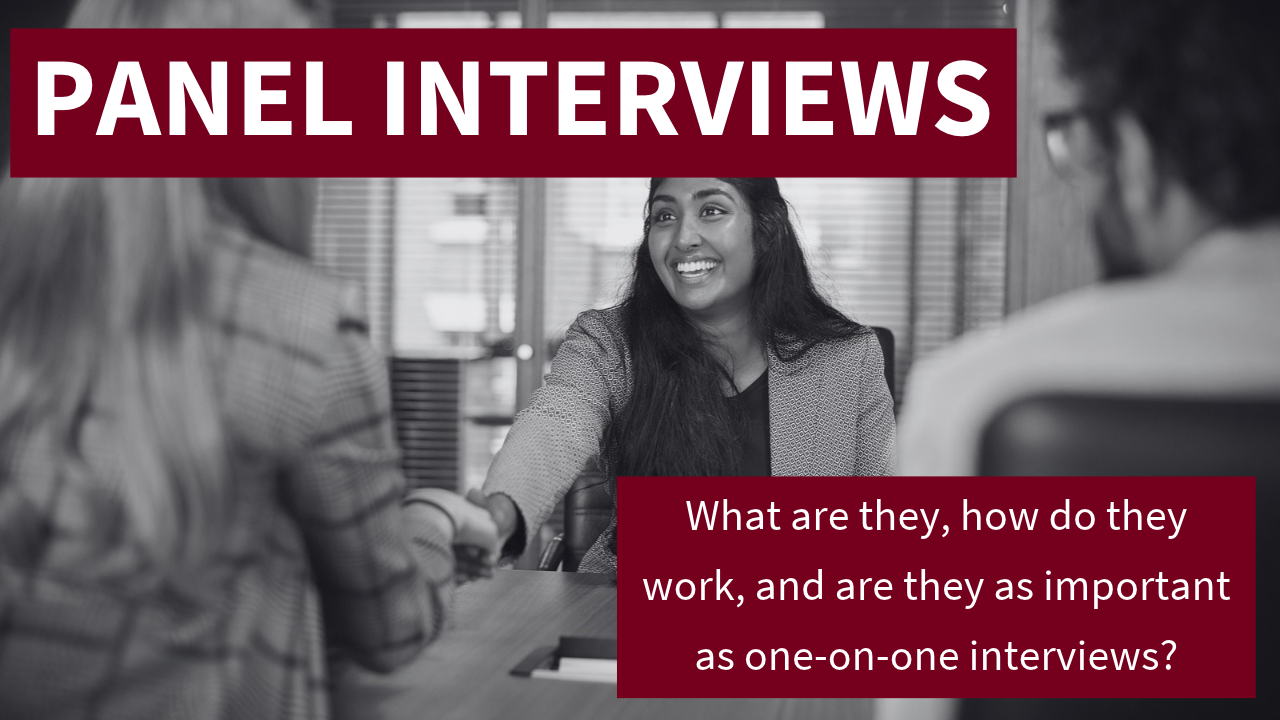
What are panel interviews?
Question:
What are panel interviews?
Answer:
Panel interviews are group interviews where the candidate meets with (usually) two to four employees at the organization where they’ve applied.
Explanation:
In today’s Career Compass, we’re going to break down the basics of panel interviews. Next week, we’ll be talking about why panel interviews have become more common in recent years.
What Panel Interviews Are
In a panel interview, a group of employees from the company where the candidate is applying interviews the candidate together.
When Panel Interviews Typically Fall in the Hiring Process
Typically a candidate is first screened by a short 15-30 minute recruiter call. Most often, the next step is an interview with the hiring manager and the panel interview comes after that. Very occasionally, the panel interview comes between the recruiter and hiring manager, particularly if the hiring manager is a big fish at the company.
Who Typically Makes Up the Panel
The composition of the panel can vary. It might be made up entirely of the peers of the position being hired for or it may contain people at or above the hiring manager in the org structure. Sometimes it even includes the subordinates of the position, although this is much less common. It could also include a mix of these categories. The most common number of interviewers on a panel is 3, but that can vary somewhat as well.
Why Employers Use Them
Employers use panel interviews to do a few things. First, the hiring manager may simply want to get a second (or third or fourth) opinion on the candidate and doing it all at once saves time. Second, they want to see how the candidate would fit in with the existing dynamic of the people he or she would be working with. Third, they want to get buy-in for their hiring choice from people who will have to work closely with or rely on the person chosen. (This buy-in also reduces the heat a hiring manager may get if the hire turns out to be a bad one; if everybody loved the candidate and agreed on the choice, then there’s less blame laid squarely on the hiring manager’s shoulders.) Finally, it may be a company requirement that people higher in the org structure sign off on new hires, rather than leaving the choice entirely up to a single hiring manager.
The Importance of Panel Interviews
Now the big question: do they carry as much weight at your one-on-one interviews? The honest answer is…maybe. A hiring manager that absolutely loves you plus a panel where they’re lukewarm toward you is certainly preferrable to the reverse. But if this is a scenario where you’re interviewing with “the higher ups” who have veto power over your hire, then it’s definitely equally important to impress them just as much as you impressed the hiring manager. And, it’s entirely possible that even if the hiring manager is convinced you’re a good fit, he might place a lot of weight on the opinion of the panel participants. So treat a panel interview with the same seriousness as you would your one-on-ones.
Come back for next week’s Career Compass where we explain why panel interviews have become more common in the last decade.
